Frequently Asked Questions

We've compiled answers to common questions about lighting manufacturing, installation processes, and product specifications. If you need additional information, our technical team is available during business hours.

Our production facility in London specializes in commercial LED panels, industrial high-bay fixtures, and architectural lighting systems. We manufacture units ranging from 20W to 500W with IP ratings from IP20 to IP65. Each product line includes both standard specifications and customizable options for voltage (220-240V), color temperature (3000K-6500K), and beam angles. We work with aluminum housings, polycarbonate diffusers, and use Bridgelux or Samsung LED chips depending on project requirements.

Standard modifications to existing designs typically require 3-4 weeks from approved drawings to dispatch. Projects involving new tooling or housing designs need 6-8 weeks. This includes prototype development, testing against UK electrical standards (BS EN 60598), and initial production runs. Orders of 50-200 units usually ship within the shorter timeframe, while larger installations or complex specifications may extend toward the upper range. We provide weekly progress updates throughout manufacturing.

All lighting products manufactured at our facility meet Part L conservation requirements for non-domestic buildings and Part B fire safety standards where applicable. We maintain UKCA marking for all fixtures and provide test certificates showing compliance with BS EN 60598 for general requirements and photobiological safety standards. Emergency lighting units conform to BS 5266-1, and we supply lux calculation reports that align with CIBSE lighting guides for different space types across commercial and industrial sectors.

Standard commercial fixtures include a 5-year warranty covering LED drivers, circuit boards, and housing integrity. Industrial high-bay units operating in demanding environments receive 3-year coverage. This covers manufacturing defects and component failures under normal operating conditions specified in product datasheets. We maintain stock of replacement drivers and LED modules in our Richmond Road facility for swift repairs. The warranty excludes damage from incorrect installation, voltage spikes beyond rated tolerance, or environmental conditions exceeding IP ratings.

Our production capabilities cover the full spectrum from warm white (2700K-3000K) through neutral white (4000K-4500K) to cool daylight (5000K-6500K). We specify LED bins with MacAdam 3-step consistency to ensure uniform appearance across installations. For retail environments requiring precise color rendering, we offer CRI 90+ options. Tunable white systems with 3000K-6000K adjustment are available for offices and healthcare facilities. Each batch undergoes spectral testing before dispatch to verify color consistency within ±150K of specified temperature.

Standard catalog items have no minimum order requirement. Custom specifications using existing tooling typically need 25-50 units to justify setup costs. Projects requiring new housing designs or specialized optics start at 100-200 pieces. These quantities allow us to maintain competitive pricing while covering tooling expenses and quality testing. For smaller requirements, we often suggest modifications to existing designs that reduce both cost and lead time. Large volume contracts receive preferential pricing structures and priority production scheduling.

Our LED panels achieve 130-150 lumens per watt, compared to 60-80 lm/W for fluorescent tubes. A typical office replacing 600x600mm fluorescent fittings (4x18W) with our 40W LED panels reduces consumption by approximately 45% while maintaining similar light levels. High-bay fixtures deliver 140-160 lm/W, replacing 400W metal halide units with 150-200W LED equivalents. These figures account for driver efficiency (>0.9 power factor) and optical losses. Actual savings depend on operating hours, but most commercial clients see payback periods of 2-3 years through reduced electricity costs and maintenance.

Most product lines support 1-10V analog dimming as standard, with DALI protocol available for building management integration. Phase-cut dimming (trailing edge) can be specified for residential applications or retrofit projects with existing infrastructure. Dimming range typically extends from 10% to 100% output without flicker or color shift. For warehouse and industrial spaces, we manufacture fixtures with built-in daylight harvesting sensors that adjust output based on natural light levels, achieving additional 20-30% energy savings beyond base LED efficiency.

Every production batch completes electrical safety testing including insulation resistance (minimum 2MΩ), earth continuity, and high-voltage flash testing at 1500V for 60 seconds. Photometric measurements verify lumen output within ±7% of datasheet specifications. We conduct thermal cycling tests on sample units from each batch, running fixtures at maximum rated temperature for 1000 hours to identify early failures. IP-rated products undergo water spray testing to relevant standards. Documentation includes test certificates, photometric reports, and material compliance declarations for each order.

We manufacture fixtures rated from IP20 (standard indoor) through IP65 (dust-tight and water jet protected). Food processing facilities typically require IP65 or IP66 with stainless steel housings. Warehouse environments usually specify IP54, providing protection against dust accumulation and water splashes. Each rating undergoes third-party verification testing. For coastal locations or car wash facilities, we recommend IP67-rated linear fixtures with sealed cable entries. Housings use corrosion-resistant powder coating or marine-grade stainless steel depending on exposure severity and budget constraints.

Standard panels include ceiling recessed installation kits and surface-mount frames. High-bay fixtures ship with adjustable suspension cables rated for fixture weight plus 20% safety margin, or rigid pendant stems in 0.5m, 1m, and 1.5m lengths. Wall-mounted brackets accommodate fixtures at angles from 0° to 45°. Track-mounting adapters suit three-circuit and four-circuit rail systems. Emergency fixtures include both ceiling and wall brackets meeting BS 5266 positioning requirements. All mounting hardware uses corrosion-resistant materials and includes necessary fixings for concrete, plasterboard, and steel surfaces.

We manufacture both maintained and non-maintained emergency fixtures with self-contained battery packs providing 3-hour duration at 10-15% output. Units include automatic testing systems that perform monthly function tests and annual duration tests, logging results for compliance records. Exit signs use high-efficiency LEDs with separate emergency circuit. Central battery system compatibility is available for larger installations requiring 2000+ emergency points. All emergency products carry BS EN 60598-2-22 certification and include detailed commissioning documentation showing illuminance levels achieved along escape routes.

Standard housings use die-cast aluminum alloy ADC12 for panels and extruded 6063-T5 aluminum for linear fixtures, both offering durability while maintaining light weight. Diffusers utilize either PMMA (acrylic) with 92% light transmission or polycarbonate where impact resistance matters. Reflectors employ 95% reflective aluminum sheet. High-temperature applications use powder-coated steel housings rated to 150°C. All materials comply with RoHS directives, containing no lead, mercury, or cadmium. Gaskets in IP-rated fixtures use silicone rubber maintaining elasticity across -20°C to +80°C temperature range.

Our technical team prepares detailed lighting designs using DIALux software for projects over 50 fixtures. Calculations account for room dimensions, surface reflectances, mounting heights, and required lux levels per space function. Reports show average illuminance, uniformity ratios, and glare ratings (UGR). We reference CIBSE guidelines for offices (500 lux at desk height), warehouses (200 lux floor level), or retail spaces (750-1000 lux). Plans include fixture quantities, positioning layouts, and circuit loading. For smaller installations, we provide spreadsheet-based calculations showing coverage and expected light levels.

Standard orders accept bank transfer with 50% deposit and 50% before dispatch. Established clients with acceptable credit references can arrange 30-day payment terms after initial transactions. We use courier services for orders under 100kg, delivering within London in 1-2 days and UK-wide in 2-4 days. Larger shipments utilize pallet freight with tail-lift delivery included. Export orders ship via specified freight forwarder with Incoterms typically Ex Works from our Richmond Road facility. Insurance covers goods until signed delivery confirmation, with claims processed through our commercial policy.

Still have questions? Contact our technical support team at [email protected] or call +44 20 3876 5432 during business hours. We provide specifications, photometric data, and application guidance for lighting projects of any scale.

About Wokedi

Wokedi began operations in 2008 as a workshop specializing in custom lighting solutions for commercial spaces. What started with a team of four engineers and designers in a modest facility in East London has grown into a full-scale manufacturing operation. We now employ 47 specialists across design, engineering, assembly, and quality control departments.

Our facility spans 3,200 square metres and houses three production lines dedicated to different product categories: architectural fixtures, industrial lighting, and decorative installations. Each line operates with computer-controlled equipment that ensures consistent quality while allowing flexibility for bespoke projects. We manufacture approximately 12,000 units annually, with 60% going to commercial clients and 40% to residential projects.
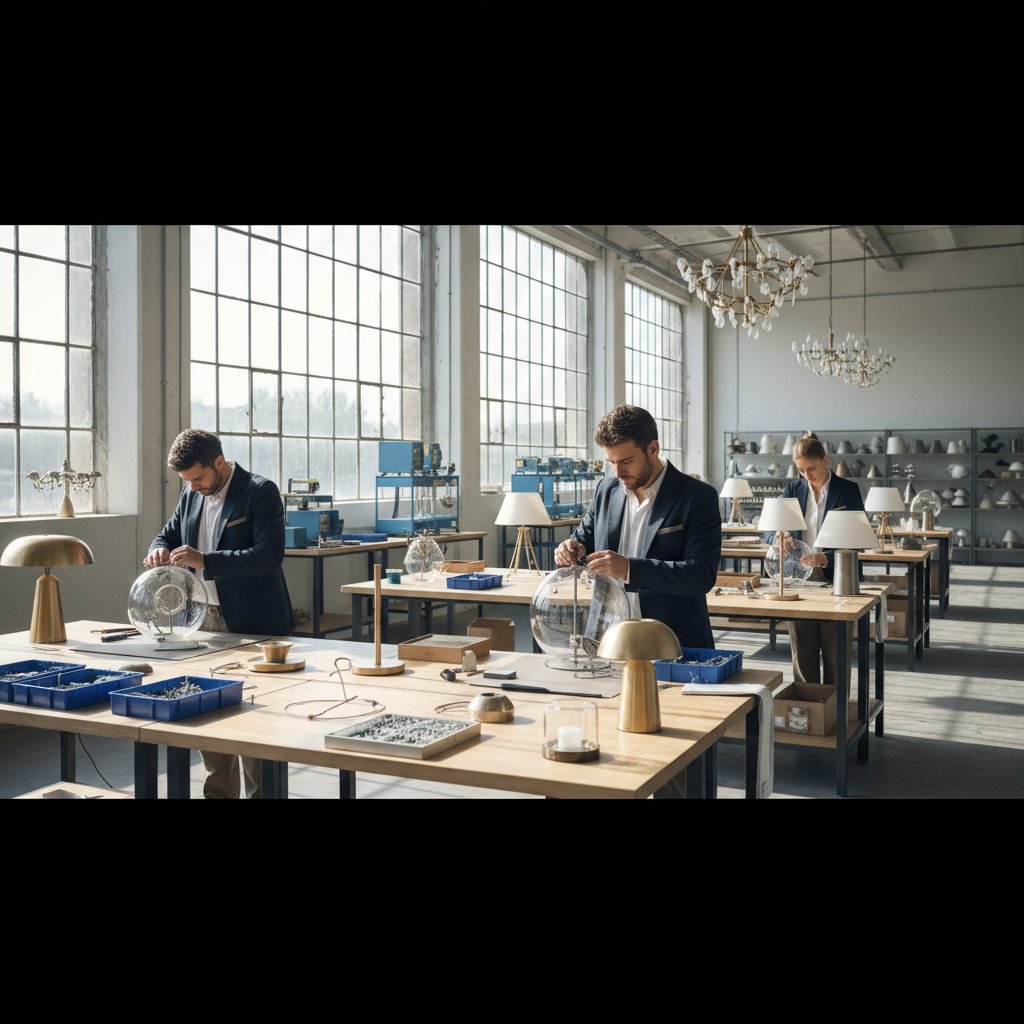
Lighting manufacturing facility

What Guides Our Work

We focus on producing fixtures that meet British Standards (BS EN 60598) and carry appropriate certifications for electrical safety. Our design process starts with understanding the technical requirements: lumen output, colour temperature, beam angle, and installation constraints. From there, we develop prototypes that balance function with form.

The company operates on several straightforward principles. First, we use materials we can verify and trace. Aluminium housings come from certified suppliers; LED components carry manufacturer warranties; glass and acrylic elements undergo impact testing. Second, each fixture passes through a three-stage quality check before packaging. Third, we maintain detailed documentation for every project, which proves useful when clients need replacements or modifications years later.

15 Years Manufacturing
47 Team Members
3200 Square Metres Facility
12000 Units Per Year

Technical Precision

We maintain tolerance levels within 0.5mm for housing components and verify electrical specifications using calibrated testing equipment.

Material Selection

All metals, polymers, and electronic components come with certification documents. We keep samples from each batch for five years.

Project Documentation

Every fixture gets a unique identifier linked to production records, material sources, and testing results accessible through our database.

Our workshop handles projects ranging from single custom pieces for listed buildings to series production for hotel chains. Recent work includes 340 pendant fixtures for a Birmingham office complex and bespoke wall sconces for a restored Georgian townhouse in Bath. We work with architects, interior designers, electrical contractors, and property developers throughout the UK.

The team includes industrial designers with backgrounds in mechanical engineering, electricians holding City & Guilds qualifications, and assembly technicians trained in our specific processes. We run continuous training on new LED technologies, control systems, and safety protocols. This ensures our staff can handle both established techniques and emerging solutions like tunable white systems or DALI dimming integration.
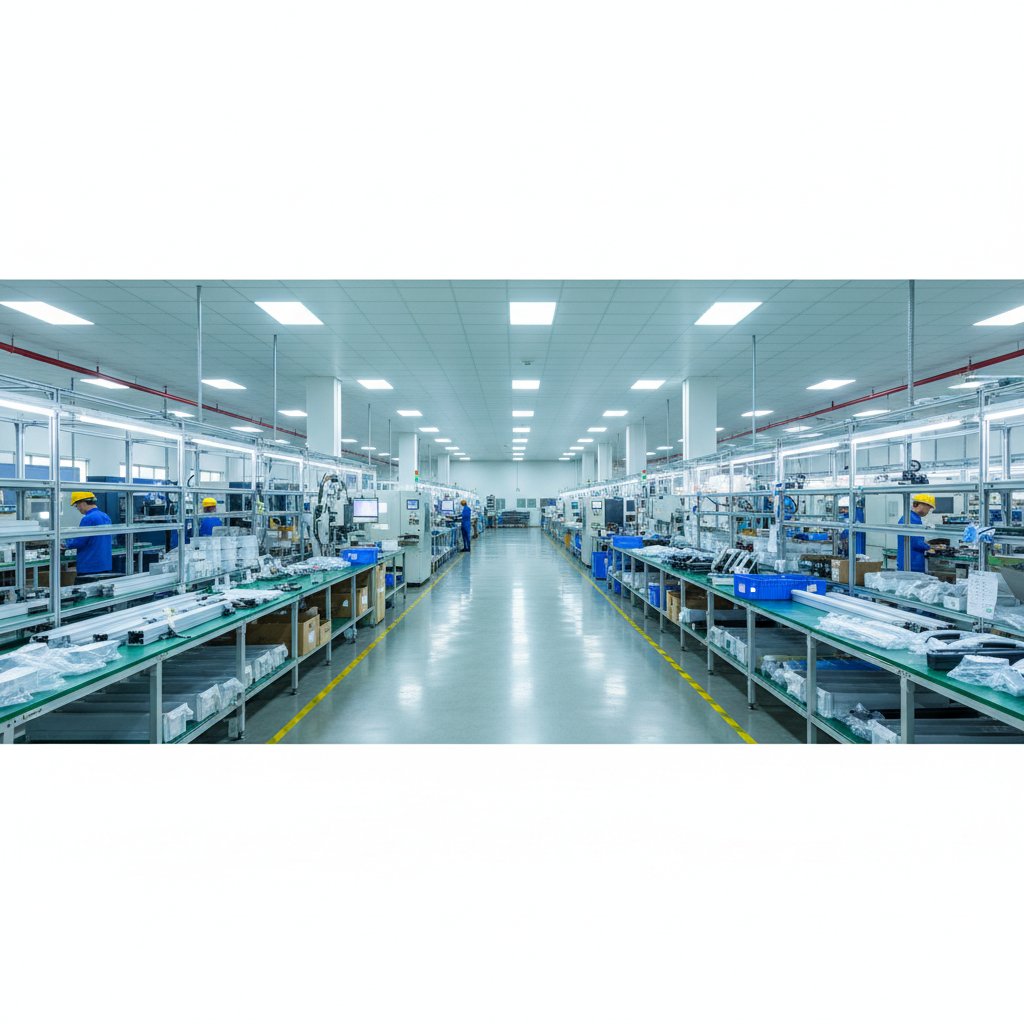
Quality control in lighting production