Why most Производство светильников projects fail (and how yours won't)
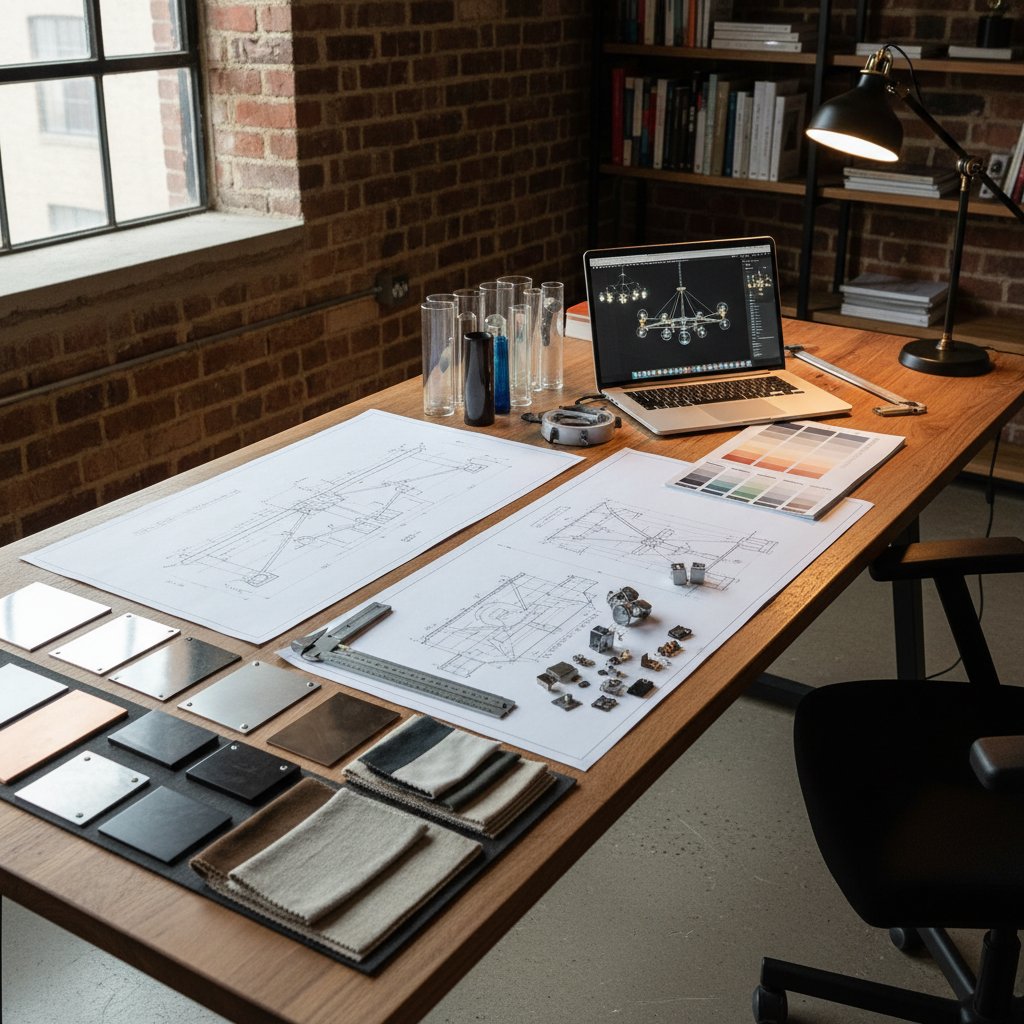
The $50,000 Mistake That Kills Lighting Manufacturing Projects
Picture this: You've just signed off on tooling for your new pendant light collection. Three months later, the samples arrive and the beam angle is completely wrong. Your LED modules run too hot. The finish looks nothing like the mockup. You're out $50,000 in tooling costs, and your product launch just got pushed back six months.
Sound familiar?
Here's the brutal truth: roughly 60% of lighting fixture manufacturing projects either fail completely or deliver products so far from the original vision that they might as well have. I've watched it happen dozens of times over the past decade, and the painful part? Most of these disasters follow the exact same pattern.
Why Lighting Projects Go Sideways (Hint: It's Not What You Think)
Most people blame their factory. Wrong target.
The real killer is something that happens way before production starts. It's the gap between what you think you've communicated and what actually gets manufactured. You send over a Pinterest board and a rough sketch. Your factory nods enthusiastically. Everyone feels good about the timeline.
Then reality hits.
Your factory interprets "warm white" as 4000K when you meant 2700K. That "matte black finish" becomes glossy because they're using powder coating instead of the textured spray you had in mind. The housing dimensions shift by 3mm because nobody specified the tolerance requirements. Small details? Each one just cost you weeks and thousands in rework.
The Three Warning Signs Your Project Is Already in Trouble
Watch for these red flags in the first month:
- Your factory quotes within 24 hours – They haven't actually calculated thermal management requirements or sourced the right LED modules. They're ballparking it.
- Nobody asks about certifications – If they're not immediately questioning UL, CE, or local safety standards, they don't understand the market you're selling into.
- The technical drawings look suspiciously simple – Real fixture engineering involves thermal simulations, photometric calculations, and detailed assembly specs. Two pages of basic dimensions isn't enough.
The Five-Step System That Actually Works
Step 1: Build Your Technical Bible (Week 1-2)
Stop sending mood boards. Start with a specification document that covers every measurable detail. I'm talking lumen output (not just "bright"), color temperature with tolerance ranges (2700K ±150K), color rendering index minimums (CRI 90+), beam angles, dimming compatibility, and material specifications down to the gauge of the metal.
Spend 15-20 hours on this document. It'll save you 200 hours of headaches later.
Step 2: Prototype the Critical Elements First (Week 3-6)
Don't prototype the entire fixture. Too expensive, too slow.
Instead, identify your technical risks. Is it the custom optic? The heat dissipation? The driver integration? Build quick prototypes of just those elements. A client recently saved $30,000 by discovering their planned aluminum extrusion couldn't handle the thermal load—they found out with a $400 prototype instead of after cutting $30K in tooling.
Step 3: Test Before You Tool (Week 7-8)
Get photometric testing done on your prototype. Real IES files from a certified lab, not factory claims. Thermal imaging under full load. Drop tests. IP rating verification if you're doing outdoor fixtures.
This costs $2,000-5,000 depending on complexity. Tooling costs $20,000-100,000. Do the math.
Step 4: Lock Down Assembly Documentation (Week 9-10)
Create step-by-step assembly instructions with photos before production starts. This forces you and the factory to walk through every connection, every wire routing decision, every mounting point. You'll catch design-for-manufacturing issues while they're still fixable with a pen, not a mill.
Step 5: Staged Production Approval (Week 11+)
Never approve full production based on one sample. Request 10 units from the production line using actual production tooling and processes. Test all ten. You're looking for consistency, not perfection of a single hand-built sample.
One manufacturer I know found that their "approved" finish varied wildly between units. They caught it at 10 pieces instead of 10,000.
The Prevention Checklist Nobody Uses (But Should)
Print this out and tape it to your monitor:
- Budget 25% of your timeline for documentation and testing before production
- Insist on thermal simulation data for any fixture over 15W
- Require photometric test reports from an independent lab, not factory data
- Build tolerance ranges into every specification (nothing is exactly 100mm in real manufacturing)
- Visit the factory floor before tooling begins, or hire someone who will
- Set up payment milestones tied to measurable deliverables, not calendar dates
Your Next Move
Look at your current lighting project. If you're past the quotation stage but haven't done photometric testing yet, pump the brakes. If your technical specifications fit on one page, you don't have specifications—you have wishes.
The projects that succeed aren't the ones with the biggest budgets or the fanciest factories. They're the ones that treat manufacturing like engineering, not like ordering from a catalog. That means front-loading your effort, embracing unglamorous documentation work, and testing assumptions before they become expensive mistakes.
Your factory can build amazing things. But they can't read your mind. Give them the technical foundation they need, and you might just end up with fixtures that actually match your vision.